Front Brakes
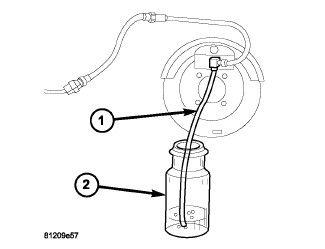
- If installed, remove the rubber dust cap from the bleeder screw on each front brake caliper.
- Start at the first wheel circuit that needs to be bled (See list in above note), attach a clear hose (1) to the bleeder screw at that the brake caliper and feed the other end of hose into a clear jar (2) containing enough fresh brake fluid to submerge the end of the hose.
- Have an assistant pump the brake pedal three or four times and hold it down before the bleeder screw is opened.CAUTION:
Open the bleeder screw at least one full turn when instructed. Some air may be trapped in the brake lines or valves far upstream, as far as ten feet or more from the bleeder screw. If the bleeder screw is not opened sufficiently, fluid flow is restricted causing a slow, weak fluid discharge. This will NOT get all the air out. Therefore, it is essential to open the bleeder screw at least one full turn to allow a fast, large volume discharge of brake fluid.
- While holding down the brake pedal open the bleeder screw at least one full turn. When the bleeder screw opens the brake pedal drops all the way to the floor. Continue holding the pedal all the way down.
- Once the brake pedal drops, close the bleeder screw. Release the pedal.
- Repeat the previous five steps until all trapped air is removed from that wheel circuit (usually four or five times). This passes a sufficient amount of fluid to expel all the trapped air from the brake hydraulic system. Be sure to monitor brake fluid level in master cylinder fluid reservoir making sure it stays at a proper level. This will ensure air does not reenter brake hydraulic system through master cylinder.NOTE:
Monitor the brake fluid level in the fluid reservoir periodically to make sure it does not go too low. This makes sure that air does not reenter the brake hydraulic system.
- Install the bleeder screw dust cap.
- Bleed the opposite front brake wheel circuit as necessary in the same manner until all air is removed from the brake hydraulic system.
- If equipped with anti-lock brakes, and the hydraulic control unit needs to be bled, then re-bleed the base brakes. Refer to STANDARD PROCEDURE - ANTILOCK BRAKE SYSTEM BLEEDING .
- Once all brakes are bled, check brake pedal travel. If pedal travel is excessive or has not improved, some air may still be trapped in the brake hydraulic system. Re-bleed the brake system as necessary.
- Test drive the vehicle to make sure the brakes are operating properly and pedal feel is correct.